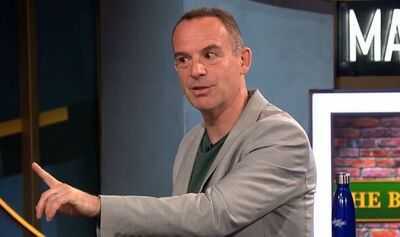
Martin Lewis has explained an important rule when it comes to bank accounts. He clarified how interest rates work after a person was disappointed to get "only a fraction" of what they thought they were due.
Speaking on a question time edition of his BBC podcast, Mr Lewis shared some financial tips, including about claiming DWP benefits and switching broadband provider. One query came in from someone frustrated with the returns from their savings account.
They explained they had a regular saver account, paying an impressive 7 percent. They paid in the maximum annual amount of £3,600 and so were expecting to be paid £252 of interest. Yet they had received "only a fraction" of this, being paid just £136, a shortfall of £116 compared to what they were expecting.
Regular saver accounts offer relatively high rates, with several providers currently offering 7 percent or more, but you are limited as to how much you can pay in each month. For example, First Direct pays 7 percent fixed for a year with its Regular Saver Account, but you can only pay in up to £300 each month.
The top-paying regular saver is currently with Zopa, paying 7.1 percent over a six month term, but the rate is variable. You can pay in up to £300 a month into this account.
A very common questionResponding to the frustrated saver, Mr Lewis said this is a "very, very common" question and is an interesting example of how interest rates work. He said: "On the money you have in them, they are the highest interest rate possible, when you're at 7 percent, it is 7 percent."
He went on to spell out the "confusion" about how this rate works. The reality is as you pay in the amount in regular chunks rather than as a lump sum, the interest rate only applies to your gradually increasing balance over the year.
Mr Lewis explained that if you are paying in £300 a month over a year, your "average balance" is actually £1,800, half the £3,600 total that you pay over the whole year. He said: "You haven't had £3,600 in for a year. You only get interest on the money paid in your account.
"In the first month, you only had £300 in, in the second month you only had £600 in. It's only after exactly 12 months that you've got £3,600 the maximum in." So the best way to work out how much interest you would earn is to apply the interest rate to the average balance for the year, in this case £1,800, plus a small amount more for compound interest.
Mr Lewis said: "People always come to me and they say, 'It's a sham, they said 7 percent interest and it wasn't 7 percent interest. They gave me way less than 7 percent with the final balance.' It's only about the money you've got in there."
Bonus £100 paymentsNationwide Building Society also has a Flex Regular Saver, paying a variable rate of 6.5 percent. You can deposit up to £200 each month over a 12-month term, so you could get up to £84.50 in interest over the year if the rate stays as its current level.
In a previous edition of the podcast, Mr Lewis reminded listeners that Nationwide will soon be setting out details about a potential £100 payment for customers.
He explained: "Nationwide is running its Fairer Share scheme that it runs every year. We're getting close to the eligibility criteria for existing customers.
"You also have to have either savings or a mortgage with it, as well as a current account, in order to get the payment, which is £100 or £150."
The mutual has issued payments through its Fairer Share scheme over the past three years, a programme where the mutual shares out its profits with members. There has been a payment each year, each time for £100, with millions of customers being paid the amount.
More than four million people were paid the bonus cash in 2025, issued in June and July. To qualify, you needed to have a qualifying current account plus either a savings account or a mortgage with Nationwide.
You also needed to have had certain account activity in January 2025, February 2025 and/or March 2025, depending on what combination of accounts you had.
Contact to : xlf550402@gmail.com
Copyright © boyuanhulian 2020 - 2023. All Right Reserved.