
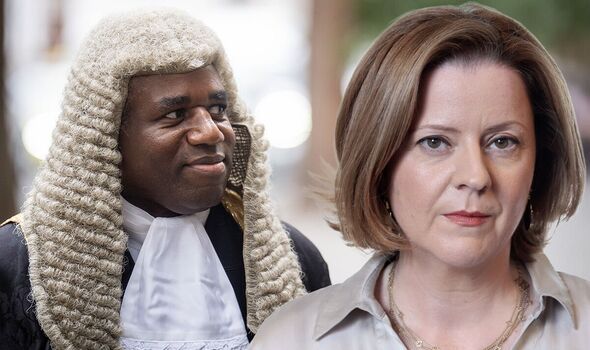
David Lammy's boneheaded plan to axe most jury trials moved a step closer this week and even upstanding citizens should be worried. In an era where criticising your child's school on WhatsApp or thinking the wrong thing can see a team of police officers on your doorstep, the justice system is not quite as remote from the lives of the ordinary man or woman as it once was.
But regardless of whether or not we manage to stay on the right side of the law, it should be a worry to all that this government is determined to end jury trials in most cases. If you are not a perpetrator, you may be unlucky enough to be a victim.
Either way, the good sense of 12 people plucked at random from their local community remains the best way to achieve justice. It has been for 800 years, so why does Lammy think he knows so much better than everyone who has gone before?
Fundamentally, the plan is philosophically flawed, but practically it is also an act of total idiocy. I have served on a jury twice and what I saw was a real eye opener. Legal rules prevent me from going into any details of the deliberations and rightly so, as that means jurors have the ability to speak freely.
But what I can say is that being locked in a small room, yes actually locked in, certainly does focus the mind. No one wanted to hang around but no one tried to rush the process just so we could be released. It was taken incredibly seriously by everyone I served alongside on both occasions.
On the first trial, we went round and round in circles and eventually told the judge we could not reach a decision. The prosecution asked for a retrial. In the second, we discussed the case constructively for hours before reaching a verdict.
What was so striking was how much everyone brought a different perspective and had picked up on different aspects of the trials. While one juror took an emotional approach, another was coldly analytical. Another brought his professional skills to bear and spotted something no one else had noticed.
By the time I was called for jury service I was already very familiar with the English justice system. As a young journalist, sitting in court was a big part of the job. Although that did involve crown court trials with judges, my bread and butter was attending magistrates court, which is where most of the cases will go instead under the Justice Secretary's reforms.
Magistrates are volunteers who tend to only serve one day a month and rely heavily on legal guidance from the clerks. I was in court most days and when you are there regularly, you see the worst of life. It can make you jaded. Another criminal back through the revolving door. That's the beauty of the jury system. It evens out the differences between the jaded and the green. It draws on the collective sense of ordinary people.
Lammy's plan is to halve the number of jury trials to cut the rising backlog of crown court cases awaiting trial but there is no evidence that it will work. Lawyers, retired judges and even a former Director of Public Prosecutions, Sir David Calvert-Smith, have called for the changes to be dropped.
Flora Page KC, who represented wrongly convicted sub-postmasters, has quit her role at a legal services watchdog in protest at the "tyrannical" plans which will "rip the heart out" of the rule of law.
Analysis by the Free Speech Union found juries are twice as likely to acquit a defendant on speech crimes than magistrates court, with 32% being found not guilty compared to 14% over the last three years.
Lammy's plan is opposed across the political spectrum and some of the most vociferous critics are from within his own ranks, including MP Karl Turner who says the measures are "unworkable, unjust, unpopular and unnecessary". As with so many of the government's most objectionable reforms, it was not in their manifesto. No one voted for this, no one wants it and if Lammy had any sense he would drop it immediately.
Contact to : xlf550402@gmail.com
Copyright © boyuanhulian 2020 - 2023. All Right Reserved.