If you grew up in the 70s-80s, the brightest students were steered into science streams, IIT being the ultimate dream. Engineering or medicine became the gold standard of success. Literature, philosophy or history was admired, but quietly dismissed as an impractical indulgence. In a country emerging from scarcity, STEM was not merely an academic preference, it was a survival strategy.
AI is now dismantling that hierarchy. This does not mean science and engineering are losing importance. The AI revolution rests on extraordinary breakthroughs in maths, computing and data science. But the premium is moving away from those who merely execute technical tasks towards those who can frame problems, interpret complexity and communicate insight. AI's rise is restoring the importance of capabilities long cultivated by humanities - from STEM to STEM + Arts = STEAM.
For decades, subjects were valued less for what they revealed about the world and more for the salaries they promised. Engineering degrees became the most reliable hedge against economic uncertainty. The system produced exceptional engineers. But it also narrowed our imagination about what intelligence looks like. AI is forcing a rethink. LLMs can generate code, summarise research papers and analyse complex datasets within seconds. The question is no longer, 'Can you code?' It's 'Can you ask the right question?'
Prompt engineering captures this transformation. The quality of an AI system's output depends on clarity and nuance of its instructions. Crafting those requires linguistic precision, conceptual clarity and contextual awareness, capabilities that liberal arts education encourages.
Sam Altman says the effectiveness of LLMs depends on the quality of human prompts and supervision. The most powerful users of AI are not necessarily the best programmers, but those who can frame problems clearly and guide machines towards meaningful outcomes.
Communication is becoming a strategic capability in the AI economy. The engineer who can explain algorithmic risk to a corporate board, the policymaker who can translate data privacy concerns into regulation - these individuals operate at the intersection of tech and society, and increasingly shape the trajectory of innovation.
When introducing iPad in 2010, Steve Jobs argued that the most transformative innovations emerge at the intersection of tech and the liberal arts. Apple's success, he suggested, was not a triumph of engineering but of design, psychology and storytelling. He himself cultivated a deep sense of design after attending calligraphy classes in college.
AI is making that intersection even more important. Machines excel at pattern recognition and prediction. What they lack is judgement. Questions about fairness in algorithmic decision-making, accountability for automated systems or the ethical deployment of AI cannot be answered through maths alone. They require perspectives drawn from philosophy, history, sociology and law. As AI begins to influence hiring, lending, healthcare and governance, stakes of these questions become enormous.
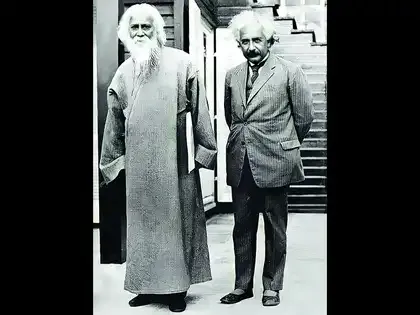
Tension between scientific precision and human interpretation is hardly new. In a celebrated 1930 conversation in Berlin, Einstein and Tagore debated the nature of truth. Einstein argued that scientific truth exists independent of human perception. Tagore countered that truth ultimately acquires meaning through human consciousness and cultural understanding. Nearly a century later, AI's rise is reviving that debate in unexpected ways. Machines may process data efficiently, but the interpretation of meaning, values and purpose remains profoundly human.
India's own technological journey illustrates the importance of this broader perspective. Success of DPI such as Aadhaar, UPI and India Stack did not emerge from engineering excellence alone. It required regulatory imagination, policy design and the ability to build trust among citizens.
The next phase of India's AI journey will require a similarly interdisciplinary approach. Our education system, however, is built around high-stakes exams and narrow academic funnels that privilege technical disciplines while marginalising broader intellectual exploration. While this model produced technical excellence, it often discouraged curiosity across fields. In the age of AI, such rigidity becomes a disadvantage.
Students trained only in routine technical tasks risk seeing those skills automated. What endures is cognitive agility, the capacity to keep learning, think critically and move across domains. Advantage will shift from narrow specialisation to integration: connecting technological capability with human context. A product designer who understands behavioural psychology. A policy expert who grasps ML.
Ironically, rise of intelligent machines is increasing the value of uniquely human qualities - curiosity, creativity, empathy and storytelling. Real AI disruption is not technological alone but also intellectual.
The future will neither belong to STEM alone, nor solely to humanities. It will belong to those who can stand at their intersection, combining analytical precision with human insight. In the age of intelligent machines, the most valuable skill may no longer be solving equations. It will be asking better questions than machines can.
The writer is former secretary, GoI
AI is now dismantling that hierarchy. This does not mean science and engineering are losing importance. The AI revolution rests on extraordinary breakthroughs in maths, computing and data science. But the premium is moving away from those who merely execute technical tasks towards those who can frame problems, interpret complexity and communicate insight. AI's rise is restoring the importance of capabilities long cultivated by humanities - from STEM to STEM + Arts = STEAM.
For decades, subjects were valued less for what they revealed about the world and more for the salaries they promised. Engineering degrees became the most reliable hedge against economic uncertainty. The system produced exceptional engineers. But it also narrowed our imagination about what intelligence looks like. AI is forcing a rethink. LLMs can generate code, summarise research papers and analyse complex datasets within seconds. The question is no longer, 'Can you code?' It's 'Can you ask the right question?'
Prompt engineering captures this transformation. The quality of an AI system's output depends on clarity and nuance of its instructions. Crafting those requires linguistic precision, conceptual clarity and contextual awareness, capabilities that liberal arts education encourages.
Sam Altman says the effectiveness of LLMs depends on the quality of human prompts and supervision. The most powerful users of AI are not necessarily the best programmers, but those who can frame problems clearly and guide machines towards meaningful outcomes.
Communication is becoming a strategic capability in the AI economy. The engineer who can explain algorithmic risk to a corporate board, the policymaker who can translate data privacy concerns into regulation - these individuals operate at the intersection of tech and society, and increasingly shape the trajectory of innovation.
When introducing iPad in 2010, Steve Jobs argued that the most transformative innovations emerge at the intersection of tech and the liberal arts. Apple's success, he suggested, was not a triumph of engineering but of design, psychology and storytelling. He himself cultivated a deep sense of design after attending calligraphy classes in college.
AI is making that intersection even more important. Machines excel at pattern recognition and prediction. What they lack is judgement. Questions about fairness in algorithmic decision-making, accountability for automated systems or the ethical deployment of AI cannot be answered through maths alone. They require perspectives drawn from philosophy, history, sociology and law. As AI begins to influence hiring, lending, healthcare and governance, stakes of these questions become enormous.
Tension between scientific precision and human interpretation is hardly new. In a celebrated 1930 conversation in Berlin, Einstein and Tagore debated the nature of truth. Einstein argued that scientific truth exists independent of human perception. Tagore countered that truth ultimately acquires meaning through human consciousness and cultural understanding. Nearly a century later, AI's rise is reviving that debate in unexpected ways. Machines may process data efficiently, but the interpretation of meaning, values and purpose remains profoundly human.
India's own technological journey illustrates the importance of this broader perspective. Success of DPI such as Aadhaar, UPI and India Stack did not emerge from engineering excellence alone. It required regulatory imagination, policy design and the ability to build trust among citizens.
The next phase of India's AI journey will require a similarly interdisciplinary approach. Our education system, however, is built around high-stakes exams and narrow academic funnels that privilege technical disciplines while marginalising broader intellectual exploration. While this model produced technical excellence, it often discouraged curiosity across fields. In the age of AI, such rigidity becomes a disadvantage.
Students trained only in routine technical tasks risk seeing those skills automated. What endures is cognitive agility, the capacity to keep learning, think critically and move across domains. Advantage will shift from narrow specialisation to integration: connecting technological capability with human context. A product designer who understands behavioural psychology. A policy expert who grasps ML.
Ironically, rise of intelligent machines is increasing the value of uniquely human qualities - curiosity, creativity, empathy and storytelling. Real AI disruption is not technological alone but also intellectual.
The future will neither belong to STEM alone, nor solely to humanities. It will belong to those who can stand at their intersection, combining analytical precision with human insight. In the age of intelligent machines, the most valuable skill may no longer be solving equations. It will be asking better questions than machines can.
The writer is former secretary, GoI
(Disclaimer: The opinions expressed in this column are that of the writer. The facts and opinions expressed here do not reflect the views of www.economictimes.com.)
Rohit Kumar Singh
Rohit Kumar Singh is secretary, department of consumer affairs, GoI