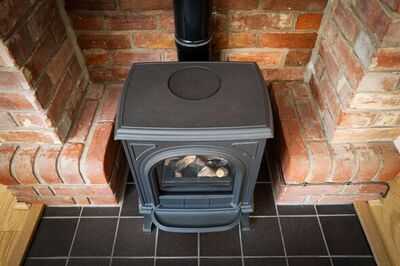
People with log burners have been told of a May mistake which could lead to them breaking the law. Experts have said that many people will be stocking up on wood now - because prices are much cheaper than waiting for the autumn.
However experts have said this could lead to problems - depending on if the homeowner has sufficient proper storage space. Christine Matthews, heating appliance expert at Gr8Fires, warns that savvy homeowners stocking up on firewood during the next few months should be wary about storing their wood correctly:
"Buying firewood in spring or summerto make a saving is smart, but you need to make sure you store it correctly. If stored incorrectly, like being placed in the corner of a room on the ground, humidity can build up adding moisture to the wood.
"Wet wood is not only illegal to burn in the UK, but it produces more smoke which damages your health as well as increasing the risk of chimney fire. You should make sure that logs are stored off the ground to allow airflow."
In England, it is illegal to sell wet wood - over 20% moisture- for home burning, aimed at reducing pollution. While wood burning is not banned, burning wet wood or using non-approved appliances in Smoke Control Areas can lead to fines of £175-£300, or up to £1,000 for purchasing prohibited fuel.
The Energy Saving Trust explained local authorities in England have the power to issue fines starting from £175 for people breaking these rules. But the fines can go as high as £300. You could also get a fine of up to £1,000 for using unauthorised fuel in an appliance that's not on the Defra-exempt list. If the situation goes to court, fines could be as high as £5,000 for repeat offenders.
It said: "Wet wood also burns less efficiently than seasoned (naturally dried) or kiln-dried wood. This is because because more energy is wasted turning the moisture in the wood into vapour, instead of heating your home.
"If you have wet or unseasoned wood, you should dry it out for at least a year before using it - wait until it has less than 20% moisture. You can buy a moisture meter from your local DIY shop for around £25 to measure this and they're easy to use. They have two metal pins that you press against the wood, and a digital display tells you the moisture content as a percentage."
At the moment, there is no ban on wood burners anywhere in the UK.
However, in December 2025 the UK Government published its environmental improvement plan. Part of this plan involves a consultation on cutting emissions from burning in homes in England. What this means for wood burners is unclear, but we'll update this guide once more information is available.
A recent parliamentary question from Conservative MP Sir James Cleverly has brought the future of wood burners in British homes into sharp focus, as he quizzed ministers on whether they plan to 'ban the use' of the appliances in residential properties. Concerns have been growing following figures showing that wood-burning stoves are a significant contributor to air pollution, emitting dangerously high levels of fine particulate matter - in some areas exceeding that produced by road traffic.
These harmful pollutants have been linked to serious health conditions, including asthma, cancer, and heart disease, with no recognised safe level of exposure. Sir James submitted a written question to Secretary of State for Environment, Food and Rural Affairs, Emma Reynolds, asking: "What plans the Government has to restrict or ban the use of wood-burning stoves in homes."
Ms Reynolds confirmed that no 'final decision' had been reached. She told Sir James: "We have launched a public consultation on a package of measures to reduce emissions from domestic burning, including proposals to tighten emission limits for new stoves, improve labelling and strengthen enforcement. We will consider all evidence before final decisions."
Stricter regulations would also require stoves, alongside wood sold for burning, to carry a label outlining the pollution they can produce and the health impacts on people. The proposals are only applicable to new appliances, although industry figures indicate that 70% of stoves tested since 2018 already meet the new one gram threshold. An additional proposal would increase the penalty for fuel suppliers selling damp wood - which creates more smoke than its dry equivalent - from £300 to £2,000. Domestic burning has been linked to thousands of deaths in the UK each year.
It's a major contributor to the country's air pollution, representing approximately one-fifth of fine particulate matter - or PM2.5 - almost equal to road transport. Air quality minister Emma Hardy stated: "Dirty air robs people of their health and costs our NHS millions each year to treat lung conditions and asthma. We are determined to clean up our air.
"By limiting emission levels and introducing new labels as outlined in our consultation, families will be able to make better, healthier choices when heating their homes."
Around 23% of UK households engage in some form of burning, with 12% doing so indoors, according to research by the Environment Agency.
Between 2009 and 2020, PM2.5 emissions from domestic burning increased by 36%, largely driven by wood burning. Currently, solid fuel appliances such as wood-burning stoves must display an energy efficiency label, but ministers are now proposing an additional warning label should sit beside it.
According to the consultation, warning labels on stoves could carry messages such as: "Please be aware that this appliance emits air pollution into and around your home which can harm your health".
Contact to : xlf550402@gmail.com
Copyright © boyuanhulian 2020 - 2023. All Right Reserved.