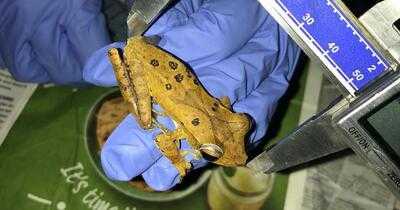
In India, urbanisation and land-use changes are driving forest loss across biodiversity hotspots, including the Western Ghats which support over 250 amphibian species. A new study based in Udupi, a Tier-2 city at the foothills of the Western Ghats, suggests that urbanisation may not necessarily lead to species loss, but may be reshaping frog communities.
The study, published in Urban Ecosystems, suggests that urbanisation is altering amphibian communities by filtering out species according to certain traits such as body size, reproduction and habitat use.
Species with specialised traits – such as arboreal (tree-dwelling) or fossorial (burrowing) frogs, direct-developing species (that hatch directly as frogs, bypassing the tadpole stage) or those with a larger body size – were associated with less-urbanised habitats farther from the city centre. In contrast, generalist species with more adaptable traits showed greater urban tolerance.
“The study’s most novel finding is that urbanisation acts as a trait filter rather than simply a diversity filter,” said Aravind NA, Senior Fellow at the Ashoka Trust for Research in Ecology and the Environment (ATREE) and the study’s supervising author.
While traditional biodiversity assessments may conclude that urbanisation has either little or drastic impact based on species counts, trait-based analyses can reveal how landscape changes restructure amphibian communities, Aravind explained. “This finding is...
Read more
Contact to : xlf550402@gmail.com
Copyright © boyuanhulian 2020 - 2023. All Right Reserved.