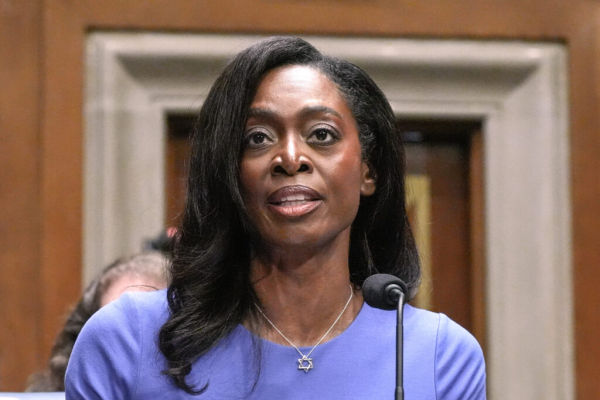
Senate Panel Advances Erica Schwartz as Trump’s CDC Director/ TezzBuzz/ WASHINGTON/ J. Mansour/ A Senate committee advanced Dr. Erica Schwartz’s nomination to lead the CDC despite concerns about political interference and vaccine policy. Republican Sen. Bill Cassidy provided crucial support after saying he believed Schwartz would resist demands unsupported by science. The panel also advanced Sean Kaufman for a senior emergency-preparedness position despite criticism of his previous vaccine comments.
Quick Look
- The Senate committee advanced Schwartz’s CDC nomination.
- The vote was nearly divided along party lines.
- Full Senate confirmation is still required.
- Schwartz, 54, would become the CDC’s 22nd director.
- She holds medical and law degrees.
- She previously served as deputy surgeon general.
- Schwartz also held a leadership position in the Coast Guard.
- Cassidy questioned whether she would resist political interference.
- He ultimately supported her nomination.
- Bernie Sanders opposed Schwartz.
- The CDC has lost more than 3,000 employees.
- That represents more than one-quarter of its workforce.
- Schwartz pledged to “never betray the science.”
- Public-health advocates sought stronger written commitments.
- The panel also advanced Sean Kaufman.
- Cassidy criticized Kaufman’s vaccine- statements.
- Kaufman would oversee public-health emergency preparedness.
Deep Look
Senate panel advances Schwartz nomination
NEW YORK — A Senate committee advanced Dr. Erica Schwartz’s nomination Thursday to lead the Centers for Disease Control and Prevention, moving her closer to taking control of an agency weakened by staff departures, leadership turnover and disputes over political interference.
The Senate Health, Education, Labor and Pensions Committee approved the nomination in a vote divided almost entirely along party lines.
Schwartz must still receive confirmation from the full Senate.
If confirmed, the 54-year-old physician would become the CDC’s 22nd director.
Schwartz would lead nation’s top health agency
The Atlanta-based CDC is responsible for protecting Americans from preventable diseases and other health threats.
Its responsibilities include monitoring outbreaks, issuing public-health guidance, supporting state and local health departments and developing recommendations concerning vaccines and disease prevention.
Schwartz holds both medical and law degrees.
Her government experience includes serving as deputy surgeon general and holding a senior leadership role with the U.S. Coast Guard.
Public-health experts initially viewed that background as a reason for cautious optimism after Trump nominated her in April.
Confirmation appeared uncertain
Schwartz’s nomination appeared vulnerable after her hearing before the committee earlier in July.
Chairman Bill Cassidy, a Louisiana Republican and physician, questioned whether she would defend the CDC’s scientific independence.
He and other senators asked how Schwartz would respond if Health Secretary Robert F. Kennedy Jr. directed the agency to adopt policies unsupported by medical evidence or accepted public-health practices.
Cassidy’s support was essential for advancing the nomination.
Without it, Schwartz might not have received enough Republican votes to leave the committee.
Cassidy offers crucial support
When the committee met last week, Cassidy said he had spoken with Schwartz after her hearing.
He also consulted people familiar with her experience and professional record.
His endorsement allowed the nomination to advance despite continued objections from Democrats and public-health advocates.
Cassidy’s support also reflected a calculation that a qualified permanent director could provide the CDC with greater stability.
Sanders questions willingness to resist
Sen. Bernie Sanders, a Vermont independent, voted against Schwartz.
He argued that the central issue was whether Trump administration officials would challenge political leaders who reject scientific evidence.
Sanders remained unconvinced that Schwartz had provided sufficiently clear evidence that she would resist Kennedy or other political appointees.
CDC has lost thousands of workers
The CDC has experienced more than a year of severe institutional disruption since Trump returned to office.
Layoffs and resignations have reduced the agency’s workforce by more than 3,000 employees.
That represents over one-quarter of its staff.
The losses have weakened programs, damaged morale and depleted the agency’s leadership structure.
A series of mostly temporary directors has come and gone, leaving the CDC without consistent management.
Political appointees fill leadership office
The CDC’s front office has been staffed by political appointees with limited or no professional training in medicine or public health.
That arrangement has increased concerns that scientific decisions could become subordinate to the administration’s political priorities.
Career scientists traditionally play an important role in evaluating research, monitoring diseases and developing health recommendations.
Public-health experts hope that a confirmed director with substantial medical experience could restore a stronger professional voice inside the agency.
Whether Schwartz would receive enough authority to do that remains uncertain.
Experts initially viewed nomination positively
When Trump announced Schwartz’s nomination, public-health specialists pointed to her medical training and federal leadership experience.
They also noted that Trump selected her rather than Kennedy.
Kennedy was a leading figure in the anti-vaccine movement before becoming secretary of health and human services.
His department oversees the CDC and other major federal health agencies.
Some experts hoped Schwartz could provide a scientific counterweight to Kennedy’s influence.
Kennedy changed vaccination policy
Kennedy promised during his confirmation process that he would not change the national vaccination schedule.
After taking office, he attempted a substantial revision of childhood vaccine recommendations.
A federal judge placed some of those changes on hold during 2026.
Kennedy’s actions angered Cassidy, who had initially expressed reservations about confirming him as health secretary.
Cassidy ultimately supported Kennedy after receiving assurances that he would not alter recommendations for childhood immunization.
Cassidy’s earlier concerns return
The conflict over vaccines placed Cassidy in a difficult position when evaluating Schwartz.
He wanted assurances that the prospective CDC director would oppose unsupported policies even when ordered by Kennedy or another senior administration official.
She repeatedly declined, however, to criticize several actions Kennedy had already taken.
That reluctance left some senators uncertain whether she would act independently after receiving confirmation.
Coalition seeks written commitments
The National Public Health Coalition, an organization of current and former CDC employees, said Schwartz’s testimony did not provide sufficient reassurance.
The group urged senators to require specific written promises concerning scientific independence, evidence-based vaccination policy and conflicts of interest.
The coalition argued that general support for science was insufficient without clear statements about how Schwartz would respond to particular political demands.
Schwartz unfamiliar with curtailed programs
During her hearing, Schwartz said she did not know that CDC programs promoting vaccination and preventing smoking had been reduced.
Her lack of familiarity with those changes raised questions about her preparation to take control of the agency.
The affected programs address major preventable causes of disease and death.
Senators also questioned her about information published on the CDC’s website concerning childhood vaccines and autism.
Her answers again disappointed some public-health advocates.
CDC website disputes vaccine evidence
Schwartz declined to promise that she would remove a CDC webpage suggesting a possible relationship between childhood vaccines and autism.
She said she had not reviewed the page.
Schwartz did agree that existing medical evidence had not established such a link.
Last week, Cassidy said Health and Human Services officials had modified the page “as a sign of good faith.”
The page continued this week to argue that “vaccines do not cause autism” is not an evidence-based claim, despite numerous studies finding no causal relationship.
Public-health leader still supports Schwartz
Dr. Georges Benjamin, executive director of the American Public Health Association, interpreted Schwartz’s testimony as an attempt to satisfy competing groups.
He disagreed with several of her answers but continued supporting the nomination.
Benjamin said Schwartz was qualified to lead the agency.
He believes she could begin rebuilding the CDC’s depleted command structure and restoring public confidence.
Focusing on bipartisan concerns such as foodborne disease outbreaks could provide an initial path toward institutional recovery.
Permanent leader could stabilize agency
Dr. Daniel Jernigan, a former senior CDC official who resigned in August, also supported confirming Schwartz.
He warned that rejecting her could leave the agency without stable leadership for an extended period.
Jernigan argued that another failed nomination might benefit Kennedy by allowing temporary officials to remain in charge.
Schwartz is Trump’s third nominee
Schwartz is Trump’s third nominee for CDC director during the past 18 months.
The president first nominated Dr. David Weldon, a former Republican congressman from Florida.
Weldon’s Senate hearing was canceled approximately one hour before it was scheduled to begin in March 2025.
He said he was informed that too few senators were willing to support his confirmation.
The administration subsequently nominated Susan Monarez.
Monarez removed after less than month
Monarez had already served as the CDC’s acting director when Trump selected her for the permanent position.
The Senate confirmed her, but she remained in office for less than one month.
Trump administration officials said Monarez did not align with the president’s agenda and removed her.
A succession of Health and Human Services officials has served as acting CDC director since her departure.
The rapid turnover has prevented the agency from establishing stable priorities and long-term management.
Other federal health posts remain empty
The CDC is one of several federal health agencies operating with leadership vacancies.
The positions of surgeon general and Food and Drug Administration commissioner remain unfilled.
The administration also lacks a confirmed assistant health secretary for preparedness and response.
That official oversees planning for public-health emergencies and natural disasters.
The office also participates in decisions about funding new vaccines for pandemic influenza and other infectious-disease threats.
Committee advances Kaufman nomination
The Senate committee also advanced Trump’s nomination of Sean Kaufman for assistant health secretary for preparedness and response.
The committee approved Kaufman along party lines.
His nomination has generated controversy because of previous public statements about vaccines.
Kaufman argued in LinkedIn posts against routine hepatitis B vaccination for newborns.
He also said he had served as an expert witness supporting people who refused COVID-19 vaccines.
Kaufman supported mRNA cancellations
Kaufman supported the Trump administration’s decision last year to cancel projects developing vaccines with messenger RNA technology.
mRNA platforms were used successfully in COVID-19 vaccines and are being studied for other infectious diseases and medical treatments.
Critics worry that Kaufman’s previous statements could influence decisions about preparing for future pandemics.
The office he would lead helps determine which next-generation vaccines receive federal support.
Those responsibilities make his views on immunization especially significant.
Cassidy criticizes Kaufman
Cassidy openly condemned some of Kaufman’s past statements.
The senator nevertheless voted to advance the nomination.
Cassidy said Health and Human Services officials had assured him that personnel changes were being made to strengthen scientific oversight.
The promised changes are intended to ensure that professional evidence rather than political beliefs shapes departmental decisions.
HHS promises limits on Kaufman’s authority
Cassidy said he was assured that Kaufman would have a limited role in decisions about vaccination.
Officials told him that, if confirmed, “he will not be involved in vaccine policy and nor will he be the ultimate decision-maker on certain issues.”
The assurance seeks to separate Kaufman’s emergency-preparedness responsibilities from controversial vaccine-policy decisions.
Questions remain about whether such a separation is practical because the office participates in pandemic planning and funding for vaccine development.
The supplied account did not describe the mechanism for enforcing the promised limits.
Sanders opposes Kaufman
Sanders voted against advancing Kaufman’s nomination.
He argued that Trump should have selected someone with a stronger record of supporting vaccination and evidence-based public health.
The full Senate must now decide whether to confirm Schwartz and Kaufman.
Their nominations will test whether concerns about scientific independence can overcome the Republican majority’s support for Trump’s health leadership team.
More on US News
Contact to : xlf550402@gmail.com
Copyright © boyuanhulian 2020 - 2023. All Right Reserved.