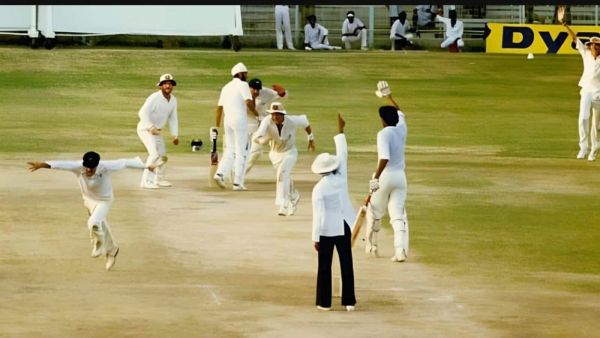
Few sporting contests can match the drama of a Test cricket match that ends in a perfect tie. A victory, a defeat or a draw are familiar outcomes, but a tie is something extremely rare. It is a moment when two teams, after five days of exhausting competition, finish absolutely level. Test cricket began in 1877 and since then more than 2,600 matches have been played. But only two have ended in a tied result.
The first was in Brisbane when the West Indies and Australia battled each other to a standstill in 1960. The second one occurred in Chennai when India and Australia fought it out but couldn’t vanquish each other in 1986. The 40th anniversary of that historic match fell on September 22 this year.
The Chennai tied Test remains one of the most remarkable encounters in the history of the game. On its 40th anniversary, it is worth reliving the five days of extraordinary drama and passion that culminated in a finish which left both players and spectators awestruck by the magnificence of the epic struggle.
Australia, led by Allan Border, won the toss and elected to bat at the MA Chidambaram Stadium. What followed was a monumental display of batting dominance led by Dean Jones, whose 210 became one of the most celebrated double-centuries in Test cricket.
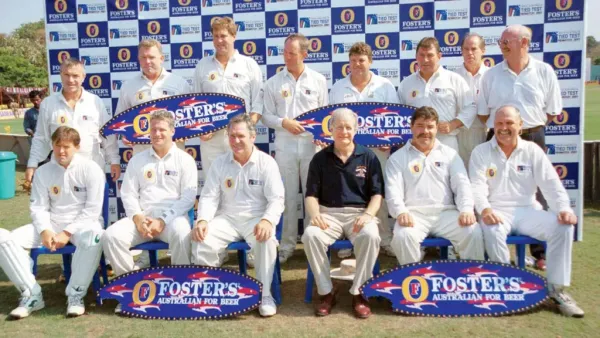
Heroic innings by Dean Jones
Jones batted for more than eight hours in sweltering heat and suffocating humidity. He was so badly affected by the climatic conditions that he vomited on the field and required hospital treatment after his innings. Yet, he refused to surrender. It was an extraordinary display of determination and physical courage.
David Boon provided a magnificent supporting act with 122, while captain Allan Border contributed 106. Australia piled up a formidable 574 for 7 declared, placing India under enormous pressure. Jones’ double-century was not merely a great batting achievement, it was an unforgettable test of endurance stretching over 502 minutes in which he faced 330 balls.
Among the Indian bowlers, it was Hyderabad’s Shivlal Yadav who was the most successful with 4 wickets for 142 runs from 49.5 overs.
Spirited fight back by India
India’s batting response was equally spirited and the home crowd had plenty to cheer about. The innings was given a remarkable lift by Kapil Dev, who counterattacked with a superb 119. His aggressive stroke play prevented Australia from gaining an even more commanding advantage. Srikkanth (52) and Azharuddin (50) provided good support to skipper Kapil. India eventually reached 397, giving Australia a substantial first-innings lead of 177 runs. Off spinner Greg Mathew took 5 for 103.
It was a contest in which neither side was willing to concede ground. Australia had produced a huge total, but India had shown that it would not be intimidated by the challenge.
Australia’s second innings saw a crucial element being introduced into the proceedings. It was much shorter, but it proved decisive in shaping the final day’s drama. The visitors scored 170 for 5 before declaring, setting India a target of 348 runs. The target was challenging, but the pitch and the batting conditions offered hope.
The stage was set for a gripping final day, with all three results – a win for India, a win for Australia or a draw – still within the realm of possibility.
Sunil Gavaskar laid the foundation
India began its pursuit of the target with determination. Sunil Gavaskar, the master technician, played a magnificent innings of 90, providing the stability that the chase demanded. Later, Mohinder Amarnath added a valuable 51, while Mohammad Azharuddin scored 42. The following Indian batsmen kept chipping away. With every run, the goal kept coming closer, inch by inch.
As the afternoon progressed, the excitement inside the stadium grew. At 330 for 6, with Ravi Shastri and Chetan Sharma batting, India needed only 18 runs. Victory seemed tantalisingly close. The crowd was waiting in eager anticipation.
But as they say, cricket is a game of glorious uncertainties. The game still had an astonishing twist in store. Aussie left-arm spinner Ray Bright suddenly turned the match on its head. With India seemingly cruising towards victory, Bright struck with a crucial burst of wickets, triggering a dramatic collapse.
From 330 for 6, India slumped to 344 for 9. The recognised batsmen had gone and the outcome of the Test hung precariously in the balance. India could still win, Australia could snatch victory or the match could end in a tie.
A dramatic final over
The final over became an unforgettable passage of cricket history. India needed 4 runs to win. Ravi Shastri, unbeaten and under immense pressure, took three runs off the first three deliveries of Greg Mathews’ over. The scores were level at 347. India needed just one more run to secure victory, with Maninder Singh (the number 11) facing Matthews. The tension was almost unbearable.
Then came the decisive moment. Greg Matthews trapped Maninder Singh leg-before-wicket with the penultimate delivery. Umpire Vikramraju did not hesitate to raise his finger and it was all over. Maninder was out. India were all out for 347. The unbelievable had happened!
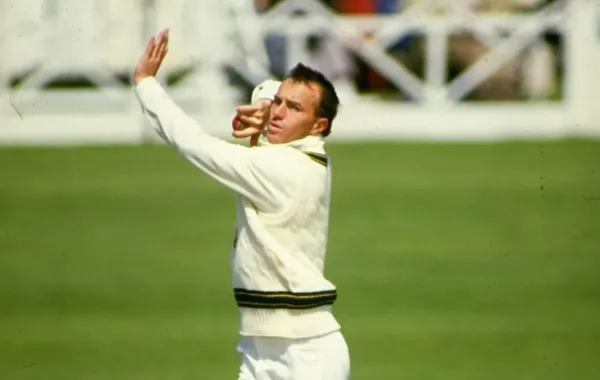
Greg Matthews took the final wicket of Maninder Singh in the Chennai Test of 1986.
The match was a tie. Australia had scored 574 for 7 declared and 170 for 5 declared. India had made 397 and 347. Both teams had scored exactly 744 runs in the match.
Forty years later, the match remains a shining example of why Test cricket is so compelling. It had everything – a heroic double-century, a magnificent counter-attacking century, a courageous chase, a sudden collapse and a finish that came down to the final over.
On September 22, 1986, the contest did not produce a winner or a loser. It produced a memory that belonged equally to India, Australia and the millions of fans who love cricket more than anything else in the world.
Contact to : xlf550402@gmail.com
Copyright © boyuanhulian 2020 - 2023. All Right Reserved.