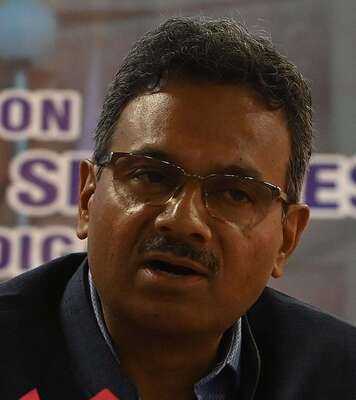
Chandigarh: Haryana has stepped up its deregulation and compliance-reduction programme with a series of reforms aimed at cutting red tape, removing duplicate approvals and improving service delivery for citizens, entrepreneurs, and investors, chief secretary Anurag Rastogi said.
Rastogi shared the state’s progress after attending a review meeting chaired by Union cabinet secretary T V Somanathan on the implementation of Phase I and II of the Compliance Reduction and Deregulation Exercise .
He said Haryana’s reform agenda covers key areas including land regulations, construction, utilities, industrial development, power, environment, tourism, education, healthcare, and ease of doing business . The state has implemented reforms in eight priority areas, while 14 others are under implementation and are expected to be completed by next month.
Healthcare has been identified as a major focus area. Haryana is working to simplify registration and no-objection certificate requirements for medical practitioners and create a single nodal mechanism for healthcare-related licences. Services linked to healthcare establishments are proposed to be integrated with the Invest Haryana portal to reduce multiple regulatory touchpoints.
Director general, industries and commerce, Yash Garg said the state’s proposal to remove dual licences for businesses has been approved by the deregulation cell.
Haryana is also liberalising rules for shops and commercial establishments. Registration under the Haryana Shops and Commercial Establishments framework is already a one-time process, while additional measures are being taken to simplify compliance for businesses.
With a strong focus on MSMEs , the state has agreed to facilitate MSMEs through self-declaration, pre-establishment approvals, and protection from inspection. It is also strengthening the role of HSIIDC and the Haryana Enterprise Promotion Centre in facilitating approvals within industrial clusters.
Industrial land norms are being eased as well. HSIIDC’s board has allowed subdivision of industrial plots, including vacant plots, into up to three plots, provided none is smaller than 450 square metres and subject to planning norms, feasibility, and applicable charges.
Thr HSIIDC has also developed labour housing at IMT Manesar and is building another facility at Kundli. A Rs 500-crore SAKSHAM fund has been proposed for upgrading infrastructure in older industrial areas, along with a new policy for common firefighting infrastructure.
Contact to : xlf550402@gmail.com
Copyright © boyuanhulian 2020 - 2023. All Right Reserved.