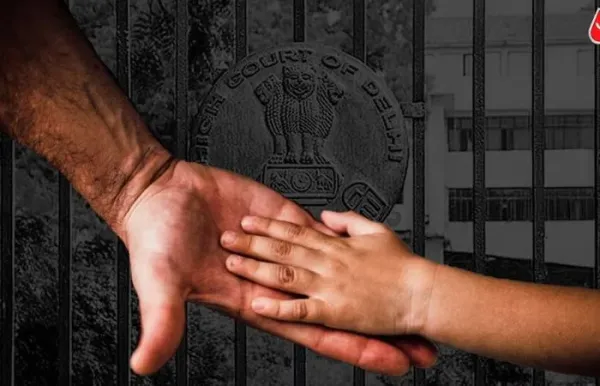
A sensitive adoption case has reached the Delhi High Court, raising an unusual legal question: Can an adoptive family seek alternative care for a child years after a lawful adoption when it becomes difficult to manage the child’s behavioural and medical needs?
The case involves a woman from Noida whose family adopted a boy through the Central Adoption Resource Authority (CARA) in 2018, when he was six years old. Eight years later, the now-14-year-old child is at the centre of a plea seeking his placement in government or private care. The mother has not asked the court to simply cancel the adoption; instead, she is seeking an alternative care arrangement while offering to bear medical and treatment expenses to the extent possible.
Why Did the Mother Approach the Court?
According to the petition, the woman and her late husband adopted the child from an orphanage in Assam through the CARA process.
The situation reportedly became increasingly difficult as the child grew older. The mother told the court that he had displayed aggression, inappropriate behaviour and theft, and had been expelled from multiple schools. The petition also states that he was diagnosed earlier this year with mild intellectual disability and other behavioural difficulties.
The woman’s circumstances changed further after her husband died in 2021. She is now a single parent living with her elderly mother and sister, and has told the court that she is struggling to manage the situation and is concerned about safety within the household.
What Has the Delhi High Court Said?
Justice Swarna Kanta Sharma is hearing the matter. The High Court has sought responses from CARA and the Child Welfare Committee regarding whether the child could be housed in an appropriate government facility or another suitable care arrangement.
The court has also recognised that there appear to be limited legal precedents dealing specifically with a situation in which an otherwise legally adopted child is sought to be placed in alternative care many years after adoption. The authorities have been asked to respond by September 30, 2026.
Importantly, the court has not ruled that the adoption can be cancelled or that the child can simply be returned. The proceedings are examining what legal and welfare options may be available in these circumstances.
What Do CARA Adoption Rules Say?
CARA operates under the Ministry of Women and Child Development and administers the legal adoption process through the designated system. Its current guidance directs prospective adoptive parents to register through the official adoption portal and refers to the Adoption Regulations, 2022.
The legal position concerning adoption also depends on the law under which the adoption was completed.
For example, Section 15 of the Hindu Adoptions and Maintenance Act, 1956 (HAMA) provides that a valid adoption cannot be cancelled by the adoptive parents or any other person. Delhi High Court has previously referred to this provision while holding that a valid adoption is not ordinarily revocable.
However, the present case involves a different and more specific question: what happens when an adoptive parent is no longer able to safely or adequately care for the child and seeks institutional or alternative care rather than simply attempting to undo the legal adoption?
That distinction is central to the current proceedings.
The Child’s Welfare Remains Central
The case highlights the difference between ending an adoption and arranging alternative care for a child.
The mother’s plea, as reported, seeks a suitable facility where the child can receive necessary care and treatment. The court therefore has to consider not only the legal status of the adoption but also the child’s welfare, medical requirements, safety and long-term care.
The authorities’ responses could help clarify what options are available under India’s current child-protection and adoption framework.
Why This Case Is Significant
Adoption is generally intended to create a permanent family relationship rather than function as a temporary placement. Delhi High Court has previously noted, in cases involving HAMA, that a valid adoption severs the child’s legal ties with the birth family and creates the legal relationship with the adoptive family.
The current proceedings therefore raise a difficult question at the intersection of adoption law, child welfare and the responsibilities of adoptive parents.
For now, the Delhi High Court has sought the authorities’ views rather than deciding whether the child can be placed back under institutional care.
The matter is expected to come up again after the authorities respond on September 30, 2026, when the court can consider the available legal and welfare options.
Contact to : xlf550402@gmail.com
Copyright © boyuanhulian 2020 - 2023. All Right Reserved.