Pope Leo XIV to undergo surgery for lung nodule: What causes these growths?
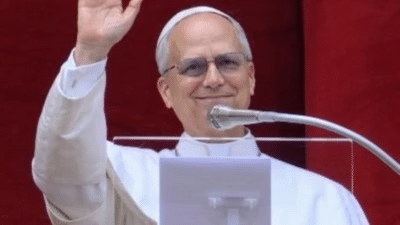
Pope Leo XIV is set to undergo surgery to remove a lung nodule , a small growth detected during medical examinations. The 71-year-old pope made the announcement in St. Peter’s Square for the Angelus prayer on Sunday. "Recently, during some medical examinations, doctors found a localized nodule in my lung," said the pontiff. "It was detected at a very early stage and is well contained."
"The doctors believe it is advisable to intervene, so, following their advice, I have decided to undergo surgery to remove it," he said. "The operation is already scheduled for the next few days." The Vatican press office, as reported by Reuters, said the pope's recovery from surgery was expected to take about a week.
According to the American Cancer Society, most lung nodules found on scans are not cancer. They can be caused by old infections, scar tissue or other conditions. Some, however, may represent an early lung cancer, which is why doctors assess them rather than dismissing them.
A nodule may cause no symptoms at all. Its discovery does not necessarily mean a person has a lung disease that they can feel.
Why would doctors remove a small nodule?Not every lung nodule needs surgery. Depending on its size, appearance, location and whether it changes over time, doctors may recommend repeat CT scans to monitor it. In some cases, a PET scan or biopsy may help clarify what the spot is.
Surgery may be considered when imaging suggests a greater risk of cancer, when the nodule is difficult to sample safely or when removing it offers the clearest route to a diagnosis. The tissue can then be examined in a laboratory to determine whether it contains cancer cells or reflects another condition.
The decision involves weighing the risk of leaving a potentially dangerous growth in place against the risks of an invasive procedure. A nodule’s appearance on a scan can provide clues, but imaging alone may not always settle the diagnosis.
Does an early finding mean it is less serious?Finding a suspicious nodule early can be valuable, particularly if it turns out to be cancer. Early-stage lung cancer may be treatable with curative intent, although the outlook depends on the cancer type, its extent and the patient’s overall health.
But early detection is not the same as a confirmed diagnosis. In Pope Leo’s case, the Vatican has not announced a cancer diagnosis, and it would be inaccurate to infer one from the planned operation.
The American Thoracic Society also cautions that many small nodules are benign and may be monitored rather than immediately biopsied. Follow-up decisions depend on the individual case.
For anyone who has been told they have a lung nodule, the practical lesson is not to panic or ignore it. Ask what the scan shows, how the nodule compares with any previous images, what follow-up is recommended and why a particular test or procedure is necessary.
Sometimes, a tiny spot is nothing more than a trace of an old infection. Sometimes it needs closer investigation. The scan raises the question; further evaluation provides the answer.
"The doctors believe it is advisable to intervene, so, following their advice, I have decided to undergo surgery to remove it," he said. "The operation is already scheduled for the next few days." The Vatican press office, as reported by Reuters, said the pope's recovery from surgery was expected to take about a week.
According to the American Cancer Society, most lung nodules found on scans are not cancer. They can be caused by old infections, scar tissue or other conditions. Some, however, may represent an early lung cancer, which is why doctors assess them rather than dismissing them.
A nodule may cause no symptoms at all. Its discovery does not necessarily mean a person has a lung disease that they can feel.
Why would doctors remove a small nodule?Not every lung nodule needs surgery. Depending on its size, appearance, location and whether it changes over time, doctors may recommend repeat CT scans to monitor it. In some cases, a PET scan or biopsy may help clarify what the spot is.
Surgery may be considered when imaging suggests a greater risk of cancer, when the nodule is difficult to sample safely or when removing it offers the clearest route to a diagnosis. The tissue can then be examined in a laboratory to determine whether it contains cancer cells or reflects another condition.
The decision involves weighing the risk of leaving a potentially dangerous growth in place against the risks of an invasive procedure. A nodule’s appearance on a scan can provide clues, but imaging alone may not always settle the diagnosis.
Does an early finding mean it is less serious?Finding a suspicious nodule early can be valuable, particularly if it turns out to be cancer. Early-stage lung cancer may be treatable with curative intent, although the outlook depends on the cancer type, its extent and the patient’s overall health.
But early detection is not the same as a confirmed diagnosis. In Pope Leo’s case, the Vatican has not announced a cancer diagnosis, and it would be inaccurate to infer one from the planned operation.
The American Thoracic Society also cautions that many small nodules are benign and may be monitored rather than immediately biopsied. Follow-up decisions depend on the individual case.
For anyone who has been told they have a lung nodule, the practical lesson is not to panic or ignore it. Ask what the scan shows, how the nodule compares with any previous images, what follow-up is recommended and why a particular test or procedure is necessary.
Sometimes, a tiny spot is nothing more than a trace of an old infection. Sometimes it needs closer investigation. The scan raises the question; further evaluation provides the answer.
Contact to : xlf550402@gmail.com
Copyright © boyuanhulian 2020 - 2023. All Right Reserved.