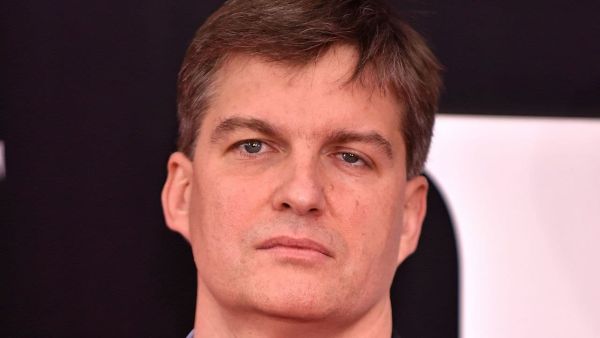
MercadoLibre and Temple & Webster are his two largest positions, each accounting for over 10% of his portfolio.
- Burry thinks Nvidia could soon offer “a heck of a trade,” though he sees its competitive edge weakening over the next five years.
- He bought more MercadoLibre below $1,500 twice recently and plans to buy again if it drops another 20%.
- He also bought more Adobe and JD.com, saying buybacks should support Adobe and calling JD “forgotten and far too cheap.”
Nvidia’s recent selloff has caught Michael Burry’s attention, but he is not rushing to make any long-term holdings. While “The Big Short” investor said Nvidia (NVDA) could soon look like “a heck of a trade,” he still expects its competitive advantage to erode over the next five years. On the other hand, Burry’s latest portfolio commentary revealed MercadoLibre (MELI) and Australian furniture retailer Temple & Webster as his two largest positions.
Each accounts for more than 10% of his portfolio, Burry said in his Cassandra Unchained post late Tuesday. He added to MercadoLibre, Adobe (ADBE), JD.com (JD) and long-dated Sprouts Farmers Market (SFM) call options.
NVDA Selloff Catches Burry’s Eye, But Doubts Remain
“I am not tempted as a long-term hold from here, but I imagine the whole market is going to think this is a heck of a trade fairly soon,” Burry said. He does not expect the controversy surrounding CEO Jensen Huang to do much damage to Nvidia’s business. His bigger worry is how long the chipmaker can hold its competitive edge.
“Still, I believe Nvidia’s competitive advantage will shrink over the next five years,” he said. He warned that closer scrutiny of Nvidia’s China chip trade and its dealings across the AI industry could hasten the erosion.
Nvidia reports earnings next week even as its board investigates reports that CEO Jensen Huang was targeted by a foreign intelligence operation through an affair with a Chinese businesswoman. However, the board has backed his leadership and said it had no reason to believe national security or company secrets were compromised.
Where Burry’s Biggest Convictions Lie
Burry added to MercadoLibre twice recently, buying below $1,500 both times. “I like MELI’s prospects from the $1400s long-term,” he said. “MercadoLibre may head even lower. I expect to make another buy if it gets 20% lower from here.”
He has defended the company’s investment spending despite pressure on profits. Third-quarter revenue and financial income rose 45% to $10.75 billion, while operating profit fell 6% to $676 million as shipping, fulfillment and marketing costs weighed on margins.
His other largest holding is Australian online furniture retailer Temple & Webster (TPW, TPLWF). “Temple & Webster made a high volume bottom, and has made a turn,” he said. Its fiscal 2026 revenue rose 10.6% to A$664.6 million, while pretax profit fell 20% to A$11.9 million.
Why Burry Is Buying Adobe And JD’s Shares
Meanwhile, Burry added to Adobe after experiencing its pricing power firsthand. “My Acrobat Pro just stopped working, and I had to pay up. So Adobe is playing hardball now,” he said.
He sees buybacks supporting the stock at current prices and is comfortable with it staying in the low $200s for a while. He also bought more JD, saying: “JD’s stock is now sitting forgotten and far too cheap.” Both rank behind his two largest positions, alongside Birkenstock (BIRK), Molina Healthcare (MOH), HCA Healthcare (HCA), Fiserv (FISV) and Deckers Outdoor (DECK).
Burry Is ‘Slumming It’ In Consumer Stocks
Burry is keeping Deckers and may add Lululemon (LULU) rather than swap one for the other. “Slumming it both of them, but both are going to be buying back stock and both make plenty of money relative to their current valuations,” he said.
He also added to Sprouts call options, though his exposure to these names, Birkenstock and Build-A-Bear Workshop (BBW) leaves little room for more retail bets. LVMH is also still on his radar, but he sees no room for it at its current price.
The AI Risks Burry Still Sees
Burry holds puts on SMH, the Nasdaq-100 index (NDX), Caterpillar (CAT), Oracle (ORCL), MetLife (MET) and Palantir (PLTR).
In September, he estimated that Amazon, Meta, Alphabet, Microsoft and Oracle had committed $2.7 trillion to purchases and leases that had yet to start. He put the total above $3 trillion after including other financing arrangements and guarantees.
His worry is that equipment could lose value before it is even switched on. “Nvidia GPUs may be economically depreciating waiting in warehouses while GAAP depreciation remains at zero,” he said.
Burry stressed that he was not alleging fraud or illegal conduct. “This is a gargantuan bet on gargantuan growth. The risk here for all of this is what happens when the music stops,” he said.
In October, Burry questioned Nvidia’s GPU valuations, arguing that they relied on projected rental income rather than actual resale prices. He also challenged the comparison of an eight-year valuation model with a five-year accelerated depreciation schedule.
He believes memory shortages have kept rental rates high, leaving older machines exposed to falling rates as supply improves and newer equipment arrives.
China Holdings Stay Put, Housing Bets Get A Review
Additionally, Burry left his Hong Kong basket unchanged apart from adding to JD. Tencent, Meituan, Haier Smart Home, Haidilao and BYD each account for slightly more than 2% of his portfolio. Despite weak Chinese consumer demand, he said the companies continue to make money and gain market share.
He also remains long Veeva Systems (VEEV) after removing previously sold calls.
A little over a month earlier, Burry swapped his Fannie Mae and Freddie Mac common shares for junior preferred securities. After the midterms, he believes Trump could pursue a resolution of their longstanding situation during his remaining two years. “As yet, this does not mean I need to switch back into the common,” he said. “But I am monitoring the situation and will let you know what I do as soon as I do it.”
For updates and corrections, email newsroom[at]stocktwits[dot]com.<
Contact to : xlf550402@gmail.com
Copyright © boyuanhulian 2020 - 2023. All Right Reserved.