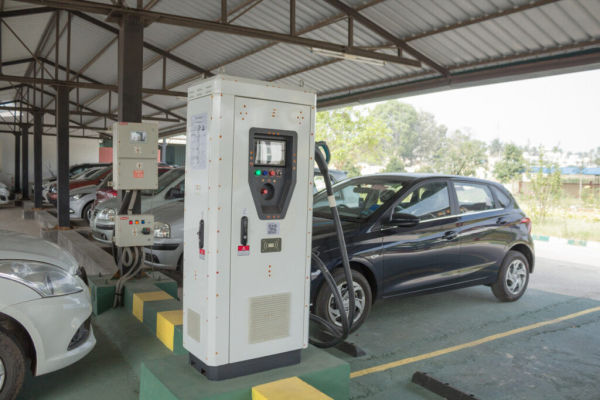
The Union Finance Ministry has made electric vehicles (EVs) the default choice for government staff cars as part of the government’s bid to reduce oil imports and cut down on emissions while capping its procurement price at Rs 20 lakh.
The decision effectively puts electric vehicles (EVs) at the centre of the government’s future staff-car procurement policy, potentially creating a more predictable institutional demand pipeline for automakers, while advancing efforts to reduce dependence on petrol and diesel and curb vehicular air pollution.
EV to replace old ICE fleet
The Department of Expenditure in the Ministry of Finance has doubled the Net Dealer Price (NDP) ceiling for the procurement of electric staff cars by central government ministries and departments to ₹20 lakh, against ₹10 lakh for internal combustion engine (ICE) vehicles, including petrol, diesel and hybrid cars.
In an Office Memorandum issued on November 10, the department said ministries and departments should ordinarily procure EVs when their existing ICE staff cars are condemned or due for replacement. It explicitly designated electric vehicles as the “default and preferred choice” for procurement.
Also read: India’s EV industry to generate up to 40 mn jobs by 2030: Report
The revised policy is part of the government’s effort to accelerate the transition towards cleaner mobility, reduce consumption of fossil fuels and take into account the prevailing market prices and lifecycle costs of vehicles.
Move to cut down on emissions, improve air quality
The move also has implications for India’s efforts to address urban air pollution. Road transport, particularly vehicles running on petrol and diesel, contributes to urban emissions. Replacing conventional government fleet vehicles with electric alternatives could help reduce tailpipe emissions and improve local air quality, particularly in cities with high vehicle density. The extent of the benefit, however, will depend on the pace of fleet electrification and the source of electricity used for charging.
Meanwhile, the differential in the price ceilings between EVs and ICE vehicles represents a clear financial preference for electric vehicles. By allowing twice the expenditure on an EV compared with a conventional vehicle, the government is seeking to address the higher upfront acquisition cost that has often been a constraint in the adoption of electric cars.
Much-needed push for EV market
For automakers, the revised norms could open up opportunities in a market where institutional procurement can provide a relatively structured source of demand. Manufacturers with electric passenger vehicles within the revised ceiling could benefit as government departments replace ageing fleets. The opportunity could extend to charging infrastructure providers, fleet operators and vehicle maintenance companies as the number of electric cars in official use increases.
Also read: Electric Vehicles: A pathway to a clean and green India
The emphasis on lifecycle costs is also significant. While electric vehicles can involve higher initial purchase expenditure, their operating costs may be lower depending on electricity tariffs, vehicle utilisation, maintenance requirements and charging arrangements. For government departments that operate vehicles over several years, these factors could influence the overall economics of procurement.
Govt will allow exceptions too
The revised instructions, however, do not completely prohibit the purchase of conventional vehicles.
Where a ministry or department considers the procurement or deployment of an EV impractical, it will have to submit a duly justified proposal to the Department of Expenditure seeking relaxation. The proposal must be approved by the Secretary of the administrative ministry or department and have the concurrence of the Financial Adviser.
The Department of Expenditure will consider such requests on a case-by-case basis.
A similar approval process will apply where departments consider the hiring of ICE vehicles necessary. Such proposals will also require justification, approval of the administrative Secretary and concurrence of the Financial Adviser before being referred to the Department of Expenditure.
Move to support EV infrastructure
The memorandum also reiterates the existing instructions issued by the Department on September 1, 2022, mandating the hiring of electric vehicles by ministries and departments.
This makes the latest order an extension of the government’s earlier policy of shifting official transport towards electric mobility. It reinforces the push across both outright procurement and the hiring of vehicles, potentially providing additional demand opportunities for electric vehicle manufacturers and fleet service providers.
Also read: India auto sector records USD 1.7 bn in deals in Q3 as EV investments drive growth
A wider deployment of EVs in government fleets could also support investment in charging infrastructure and improve the availability of supporting services. Beyond the direct reduction in petrol and diesel consumption, the shift could help reduce tailpipe emissions from official transport fleets.
Will directive translate into implementation?
However, the order does not specify procurement targets, timelines for fleet electrification or minimum numbers of electric vehicles to be purchased.
The actual demand generated will depend on the replacement cycles of existing government cars, the availability of suitable electric models and the ability of departments to deploy charging facilities.
All other terms and conditions governing entitlement, procurement and hiring of cars under the September 1, 2022, Office Memorandum and subsequent instructions will remain unchanged. Procurement will continue to be governed by the General Financial Rules, 2017, as amended from time to time.
Also read: Navratri vehicle retail falls 6.5 pc as passenger car sales slump 22 pc, EV demand stays strong
The revised instructions will come into force with immediate effect.
The policy gives electric vehicles a distinct advantage in future government staff-car procurement, while making the purchase of petrol, diesel and hybrid vehicles subject to specific justification and approval.
Contact to : xlf550402@gmail.com
Copyright © boyuanhulian 2020 - 2023. All Right Reserved.