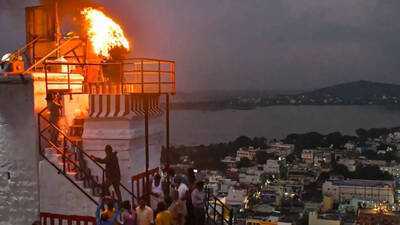
Thiruparankundram Karthigai Deepam row: Supreme Court's one-time nod for lighting lamp at Deepathoon, Tamil Nadu's review petition, 5,600 cops on guard – all you need to know
MADURAI: Thiruparankundram hill in Madurai has been placed under heavy security ahead of the Karthigai Deepam festival on November 24, amid a dispute over lighting the traditional lamp on a stone pillar near the Hazrat Sultan Sikandar Badusha Auliya Dargah.
The Supreme Court has permitted a restricted team authorised by the Subramaniya Swamy Temple administration to light the lamp at the Deepathoon as a one-time arrangement. However, the Tamil Nadu government has approached the apex court seeking a review of the order, leaving uncertainty over whether the ritual will be carried out.
With protests, preventive detentions and prohibitory orders in place, here is what the dispute is about and what is happening on the ground.
What is Karthigai Deepam?Karthigai Deepam is a traditional Tamil Hindu festival celebrated by lighting lamps in homes and temples. The festival is particularly associated with the worship of Lord Shiva and the lighting of a ceremonial lamp.
At Thiruparankundram, a traditional lamp is lit at a customary location near the temple. The current dispute concerns the demand to light the Karthigai Deepam on the Deepathoon, a stone pillar on the hill near the dargah.
What is the Thiruparankundram dispute?The dispute centres on the religious and legal status of the Deepathoon and whether the ceremonial lamp can be lit there.
A Madras high court division bench, in its January 6 judgment, held that the pillar stood on temple land and directed that the lamp be lit there every year. The judgment followed proceedings over the location and the right to conduct the ritual.
The Supreme Court, on November 20, stayed paragraphs 1 to 141 of the high court judgment and permitted the lamp to be lit at the Deepathoon on November 24, but only as a one-time arrangement.
The apex court clarified that its interim order did not recognise any customary, religious or proprietary right over the location. It also did not declare the lighting of the lamp an essential religious practice or confer a continuing right of entry. Questions relating to ownership, possession and access remain open. The matter is scheduled for further hearing in the second week of January 2027.
What happened during the 2025 Karthigai Deepam dispute?The Deepathoon dispute had triggered protests and tense situations in 2025 as well.
Hindu Munnani and BJP members protested after the temple authorities did not light the lamp at the Deepathoon. Although the Madras high court permitted a petitioner and 10 others to light it, police stopped them from going up the hill, citing prohibitory orders under Section 163 of BNSS. A scuffle broke out between protesters and police, leaving two policemen with minor injuries. Nearly 50 protesters were detained.
A 40-year-old auto driver, Poorna Chandran, allegedly set himself ablaze inside a police booth in Madurai. Police said he had sent a voice note to friends and relatives claiming he took the step because the Karthigai Deepam was not lit at the Deepathoon. His death triggered further protests, with Hindu Makkal Katchi members staging a sit-in at the government Rajaji Hospital mortuary.
What did the Supreme Court direct?The Supreme Court allowed the ritual under strict conditions to prevent a law-and-order situation.
The review petition sought a stay of the one-time permission. The court did not hear the petition on Monday.
The state has previously argued that the pillar is a survey marker and has no connection with worship, citing earlier court orders from 1996, 2014 and 2017. The Supreme Court also heard the dargah authorities and devotees before passing its interim order.
Chief minister C Joseph Vijay held discussions with law minister CTR Nirmal Kumar, advocate general Vijay Narayan and DGP Mahesh Kumar Aggarwal in Chennai on Monday. However, the government has made no official announcement on whether the lamp will be lit at the Deepathoon.
What security arrangements are in place?More than 5,600 police personnel have been deployed in Thiruparankundram and surrounding areas. Police said intelligence inputs indicated large-scale mobilisation by groups both supporting and opposing the lighting of the lamp.
The deployment includes:
The order prohibits unauthorised assemblies, demonstrations, processions, public meetings and climbing the hill. Authorised temple rituals, religious ceremonies, customary worship, lawful access to the dargah and activities implementing the Supreme Court’s directions are exempted.
Madurai city police have also declared Thiruparankundram hill and surrounding areas a drone red zone for November 23 and 24. Under the Drone Rules, 2016, unauthorised drone and unmanned aerial vehicle operations are prohibited over the hill, its summit, Girivalam pathways and specified areas around the foothills. Prior permission is required for any unavoidable drone operations, and violators may face legal action.
Who has been detained and what protests have taken place?Police have detained several Hindu Munnani leaders and members who attempted to travel to Madurai, demanding implementation of the Supreme Court’s order.
What is the separate Lingamalai hill case?The Karthigai Deepam-related dispute has also reached the Madras high court in connection with Lingamalai hill in Pudukottai.
On Monday, a division bench of Justices G R Swaminathan and Thirumagal Chandrasekar recorded an undertaking from petitioner A Subramanian that only Girivalam would be conducted on the hill on November 24 and that no lamp would be lit near a disputed Christian cross.
The petition sought the removal of the cross, which the petitioner alleged had been unauthorisedly constructed on the southern portion of the hill by a church priest in 1996. The petitioner said the hill had historical, archaeological, religious and cultural significance for residents of Malampatti and nearby villages.
The court took note of the undertaking that the petition was limited to ensuring that Girivalam could be conducted without obstruction and that no lamp would be lit near the cross.
The Supreme Court has permitted a restricted team authorised by the Subramaniya Swamy Temple administration to light the lamp at the Deepathoon as a one-time arrangement. However, the Tamil Nadu government has approached the apex court seeking a review of the order, leaving uncertainty over whether the ritual will be carried out.
With protests, preventive detentions and prohibitory orders in place, here is what the dispute is about and what is happening on the ground.
What is Karthigai Deepam?Karthigai Deepam is a traditional Tamil Hindu festival celebrated by lighting lamps in homes and temples. The festival is particularly associated with the worship of Lord Shiva and the lighting of a ceremonial lamp.
At Thiruparankundram, a traditional lamp is lit at a customary location near the temple. The current dispute concerns the demand to light the Karthigai Deepam on the Deepathoon, a stone pillar on the hill near the dargah.
What is the Thiruparankundram dispute?The dispute centres on the religious and legal status of the Deepathoon and whether the ceremonial lamp can be lit there.
A Madras high court division bench, in its January 6 judgment, held that the pillar stood on temple land and directed that the lamp be lit there every year. The judgment followed proceedings over the location and the right to conduct the ritual.
The Supreme Court, on November 20, stayed paragraphs 1 to 141 of the high court judgment and permitted the lamp to be lit at the Deepathoon on November 24, but only as a one-time arrangement.
The apex court clarified that its interim order did not recognise any customary, religious or proprietary right over the location. It also did not declare the lighting of the lamp an essential religious practice or confer a continuing right of entry. Questions relating to ownership, possession and access remain open. The matter is scheduled for further hearing in the second week of January 2027.
What happened during the 2025 Karthigai Deepam dispute?The Deepathoon dispute had triggered protests and tense situations in 2025 as well.
Hindu Munnani and BJP members protested after the temple authorities did not light the lamp at the Deepathoon. Although the Madras high court permitted a petitioner and 10 others to light it, police stopped them from going up the hill, citing prohibitory orders under Section 163 of BNSS. A scuffle broke out between protesters and police, leaving two policemen with minor injuries. Nearly 50 protesters were detained.
A 40-year-old auto driver, Poorna Chandran, allegedly set himself ablaze inside a police booth in Madurai. Police said he had sent a voice note to friends and relatives claiming he took the step because the Karthigai Deepam was not lit at the Deepathoon. His death triggered further protests, with Hindu Makkal Katchi members staging a sit-in at the government Rajaji Hospital mortuary.
What did the Supreme Court direct?The Supreme Court allowed the ritual under strict conditions to prevent a law-and-order situation.
- A restricted team authorised by the temple administration can climb the hill and light the lamp.
- The Madurai district collector will decide the team’s size and composition in consultation with the temple executive officer, the Archaeological Survey of India (ASI) and the police commissioner.
- The collector will supervise the exercise and finalise the timing and access route.
- Members of the public cannot accompany the team. Processions, congregations and slogans are prohibited.
- No excavation, construction or alteration is permitted at the site.
- Worship at customary locations and lawful access to the dargah must continue undisturbed.
- The collector must submit a compliance report. The court has also said the CRPF may be deployed if necessary.
The review petition sought a stay of the one-time permission. The court did not hear the petition on Monday.
The state has previously argued that the pillar is a survey marker and has no connection with worship, citing earlier court orders from 1996, 2014 and 2017. The Supreme Court also heard the dargah authorities and devotees before passing its interim order.
Chief minister C Joseph Vijay held discussions with law minister CTR Nirmal Kumar, advocate general Vijay Narayan and DGP Mahesh Kumar Aggarwal in Chennai on Monday. However, the government has made no official announcement on whether the lamp will be lit at the Deepathoon.
What security arrangements are in place?More than 5,600 police personnel have been deployed in Thiruparankundram and surrounding areas. Police said intelligence inputs indicated large-scale mobilisation by groups both supporting and opposing the lighting of the lamp.
The deployment includes:
- 187 personnel at the hilltop.
- 190 near the dargah.
- 282 at Nellithoppu.
- 318 around Kasi Viswanathar temple.
- 453 guarding the temple steps.
- 163 along the nine routes leading up the hill.
- 125 along the Girivalam path.
- 110 at Subramaniya Swamy Temple.
The order prohibits unauthorised assemblies, demonstrations, processions, public meetings and climbing the hill. Authorised temple rituals, religious ceremonies, customary worship, lawful access to the dargah and activities implementing the Supreme Court’s directions are exempted.
Madurai city police have also declared Thiruparankundram hill and surrounding areas a drone red zone for November 23 and 24. Under the Drone Rules, 2016, unauthorised drone and unmanned aerial vehicle operations are prohibited over the hill, its summit, Girivalam pathways and specified areas around the foothills. Prior permission is required for any unavoidable drone operations, and violators may face legal action.
Who has been detained and what protests have taken place?Police have detained several Hindu Munnani leaders and members who attempted to travel to Madurai, demanding implementation of the Supreme Court’s order.
- BJP state president Nainar Nagenthran and around 50 party members were detained by police near Subburaj Mill at Thachanallur in Tirunelveli city on Tuesday while he was on his way to Thiruparankundram.
- Members were detained in Karaikudi and other places while attempting to reach Thiruparankundram. They were carrying a fire pot and a Vel to light the ceremonial lamp.
- In Tiruppur, a large police deployment was made outside the residence of Hindu Munnani Tamil Nadu president Kadeswara Subramaniam, leading to tense moments.
- In Tirunelveli, police took three Hindu Munnani functionaries into preventive custody.
What is the separate Lingamalai hill case?The Karthigai Deepam-related dispute has also reached the Madras high court in connection with Lingamalai hill in Pudukottai.
On Monday, a division bench of Justices G R Swaminathan and Thirumagal Chandrasekar recorded an undertaking from petitioner A Subramanian that only Girivalam would be conducted on the hill on November 24 and that no lamp would be lit near a disputed Christian cross.
The petition sought the removal of the cross, which the petitioner alleged had been unauthorisedly constructed on the southern portion of the hill by a church priest in 1996. The petitioner said the hill had historical, archaeological, religious and cultural significance for residents of Malampatti and nearby villages.
The court took note of the undertaking that the petition was limited to ensuring that Girivalam could be conducted without obstruction and that no lamp would be lit near the cross.
Contact to : xlf550402@gmail.com
Copyright © boyuanhulian 2020 - 2023. All Right Reserved.